
Summary
Download the full whitepaper...
Automation is rigid, yet transitioning to control phases provides efficacy and fluidity
In this third part of our Controls series, we look at the transition from automation to controls
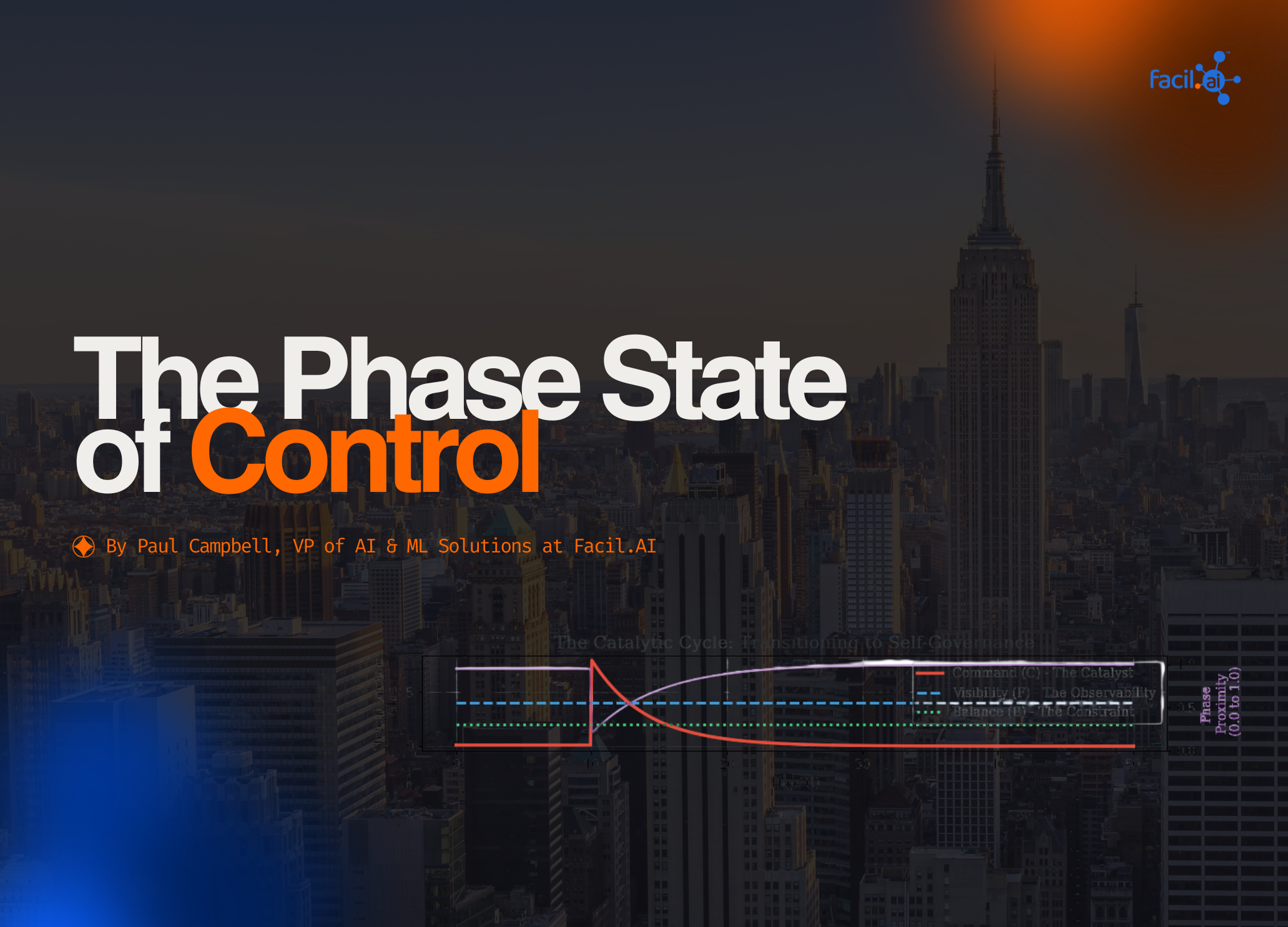
Consider a better way to think about control in three stages:
- Automation (Solid): Rigid, low visibility, high manual input
- Dynamic Control (Liquid): Smarter, but requires constant adjustment
- Self-Governance (Gas): Systems run in sync with real conditions, with little to no intervention
If the gas phase of automation, self-governance, is possible, why doesn’t every building use it?
Because getting there requires:
- More sensors and better data (higher fidelity)
- Integration across systems
- Investment in computational intelligence
So many organizations choose automation because it's simpler, not because it’s better.
Yet the transition away from automation and toward smarter, more self-governed controls can be eased by looking at how the benefits outweigh the simplicity.
"...Active commanding is a poor substitute for deeper understanding." -- Paul Campbell

Read the full whitepaper for a full explanation of the phase states of control