
Summary
Download the full whitepaper...
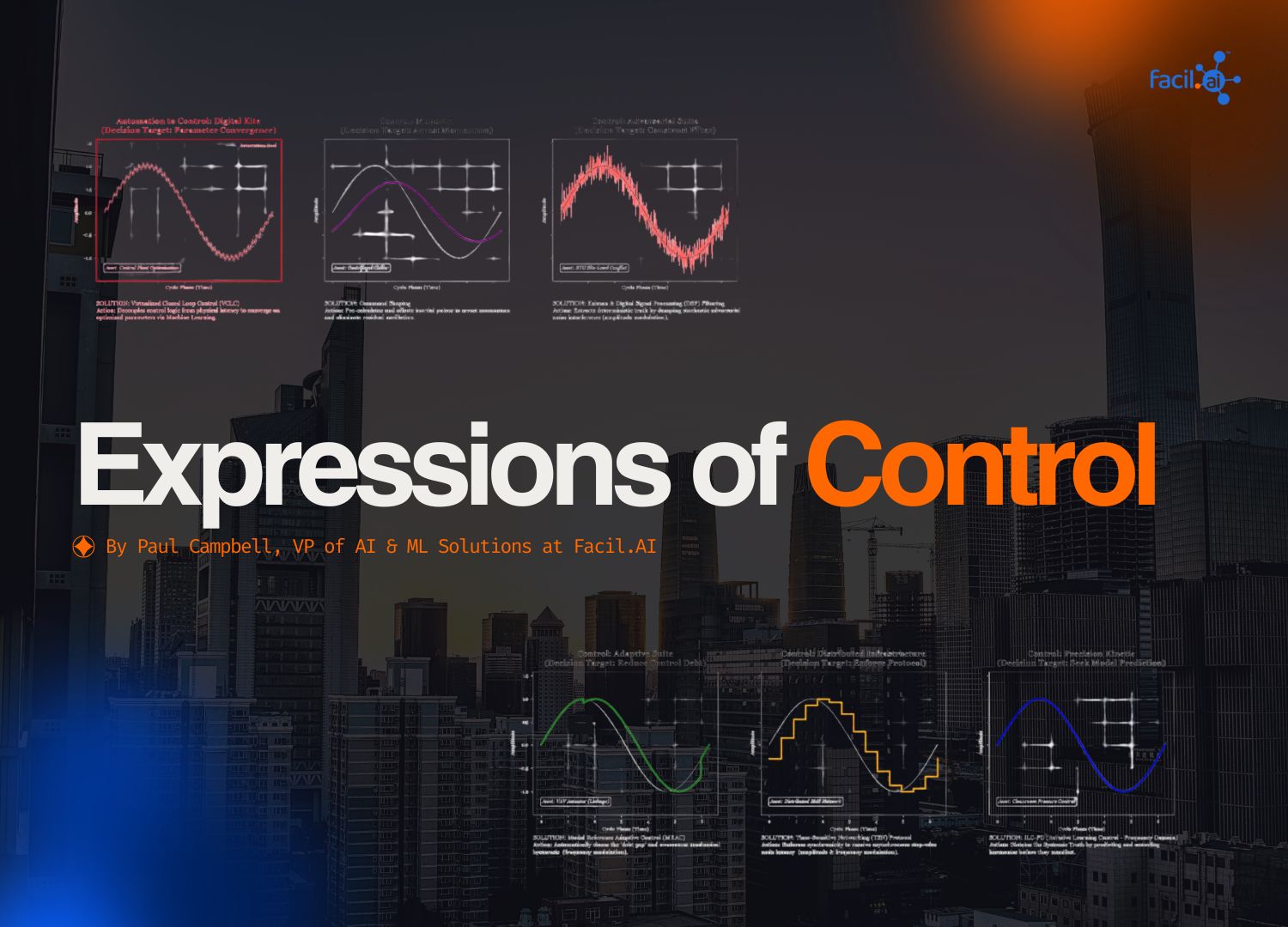
Expressions of Control: A Stoichiometric Framework of Industrial Equilibrium
Why Many HVAC Control Systems Underperform — and How AI Can Fix It
Many commercial buildings invest in better HVAC control algorithms, building automation systems (BAS/BMS), or energy management software, yet still experience high energy use, comfort complaints, and frequent manual overrides.
The problem is usually not the algorithm.
There is a mismatch between the HVAC system and the control strategy used to manage it.
Effective HVAC control depends on three foundational capabilities:
Control Authority (Actions)
What the system can actually adjust: fan speeds, valve positions, compressor staging, and temperature setpoints.
System Visibility (Sensors and Data)
What the building automation system can observe: temperature sensors, airflow readings, power meters, occupancy data, and equipment feedback.
External Commands (Operator Inputs)
How much outside guidance the system requires: schedules, manual overrides, weather forecasts, or utility signals.
When these three elements are aligned, HVAC systems maintain stable performance and operate efficiently. When they are not aligned, buildings accumulate control debt, the hidden operational cost of unstable automation. This often appears as:
- Excess HVAC energy consumption
- Constant operator overrides
- Unstable control loops
- Persistent occupant comfort issues
For building owners and facility operators, the takeaway is simple:
Better building performance doesn’t come from adding more software. It comes from aligning HVAC systems, sensors, and control logic so the building can stabilize itself.
AI-driven building intelligence platforms like Facil.ai make that alignment possible, helping commercial buildings move from reactive control to autonomous, energy-efficient operation.